

Cancer is the diagnosis pet parents fear above all others…
At Victoria, we are here to help in this most difficult situation.
We are not cancer specialists, and we strongly recommend consulting with a cancer specialist for any cases of advanced, serious, or uncommon cancer.
We do, however, regularly provide cancer care for certain cancers.
Although cancer is a very tough journey, it’s a journey we love taking with our friends. Cancer treatment often involves meeting patients and their families on a regular basis. Like no other condition, cancer helps us to meet amazing people and animals and forge friendships which last a lifetime. There’s nothing more important than fighting for the ones we love.
Cancer Care
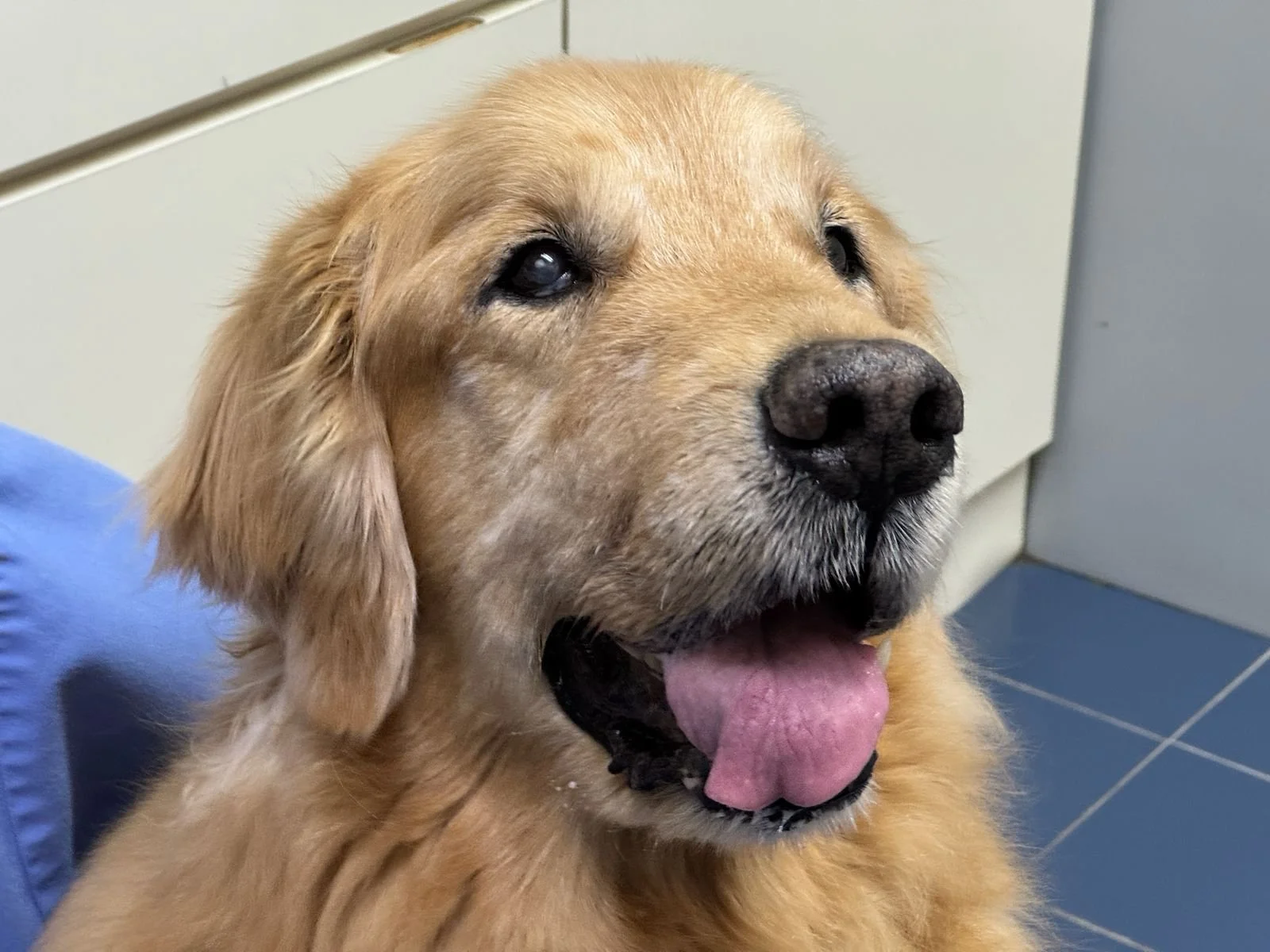
Goldie, showing us the right way to fighter cancer is always with a smile!
Lymphoma:
The most common cancer of dogs and cats is lymphoma.
Lymphoma can come in a number of different forms, most commonly enlarged external lymph nodes in dogs, and thickening or masses within the intestines in cats.
At Victoria we can provide accurate and rapid diagnosis of lymphoma in dogs and cats, by needle aspirates, biopsies, diagnostic imaging, or a combination of these.
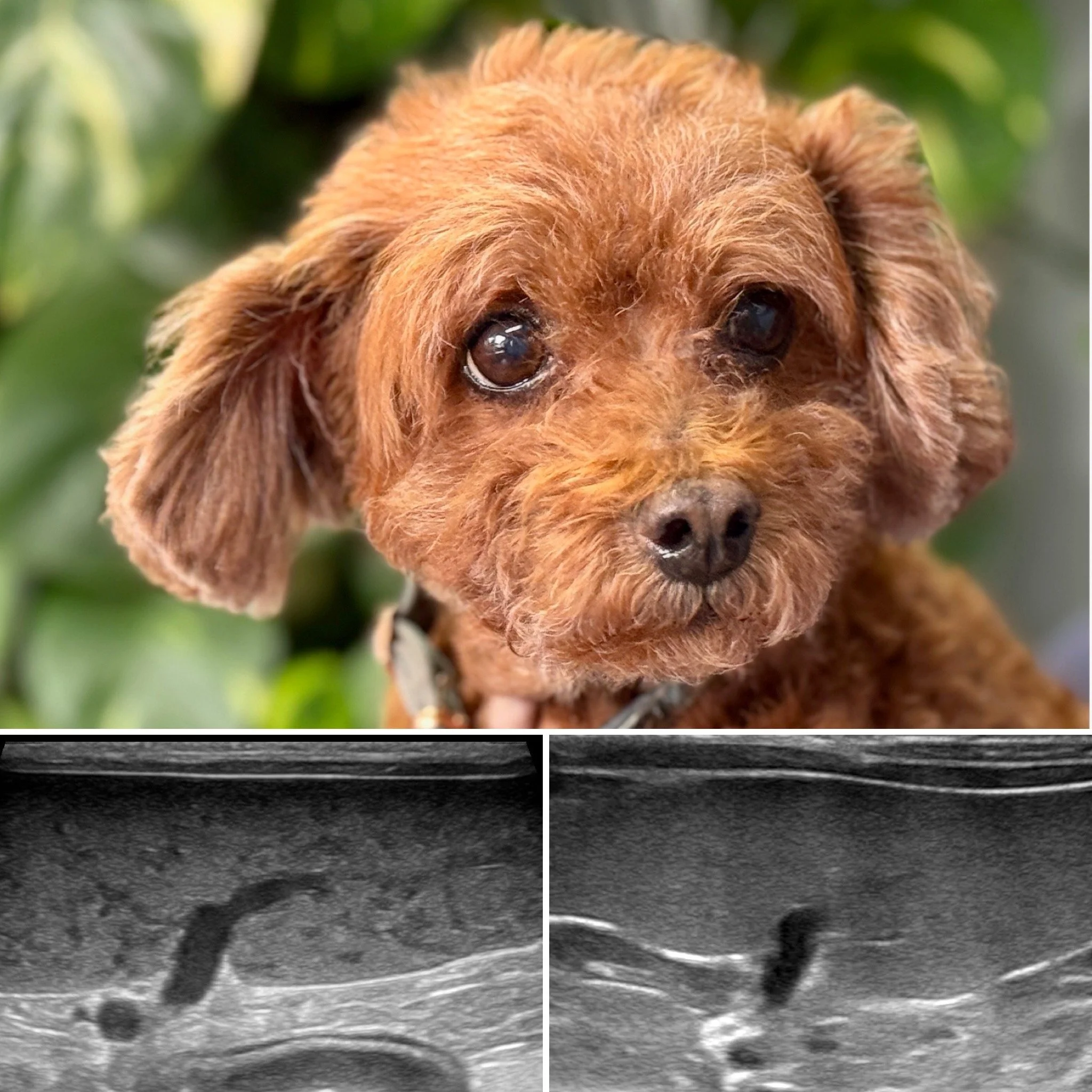
Milo, one of our lymphoma heroes, in remission, as shown here by ultrasound images of the spleen, before and after chemotherapy.
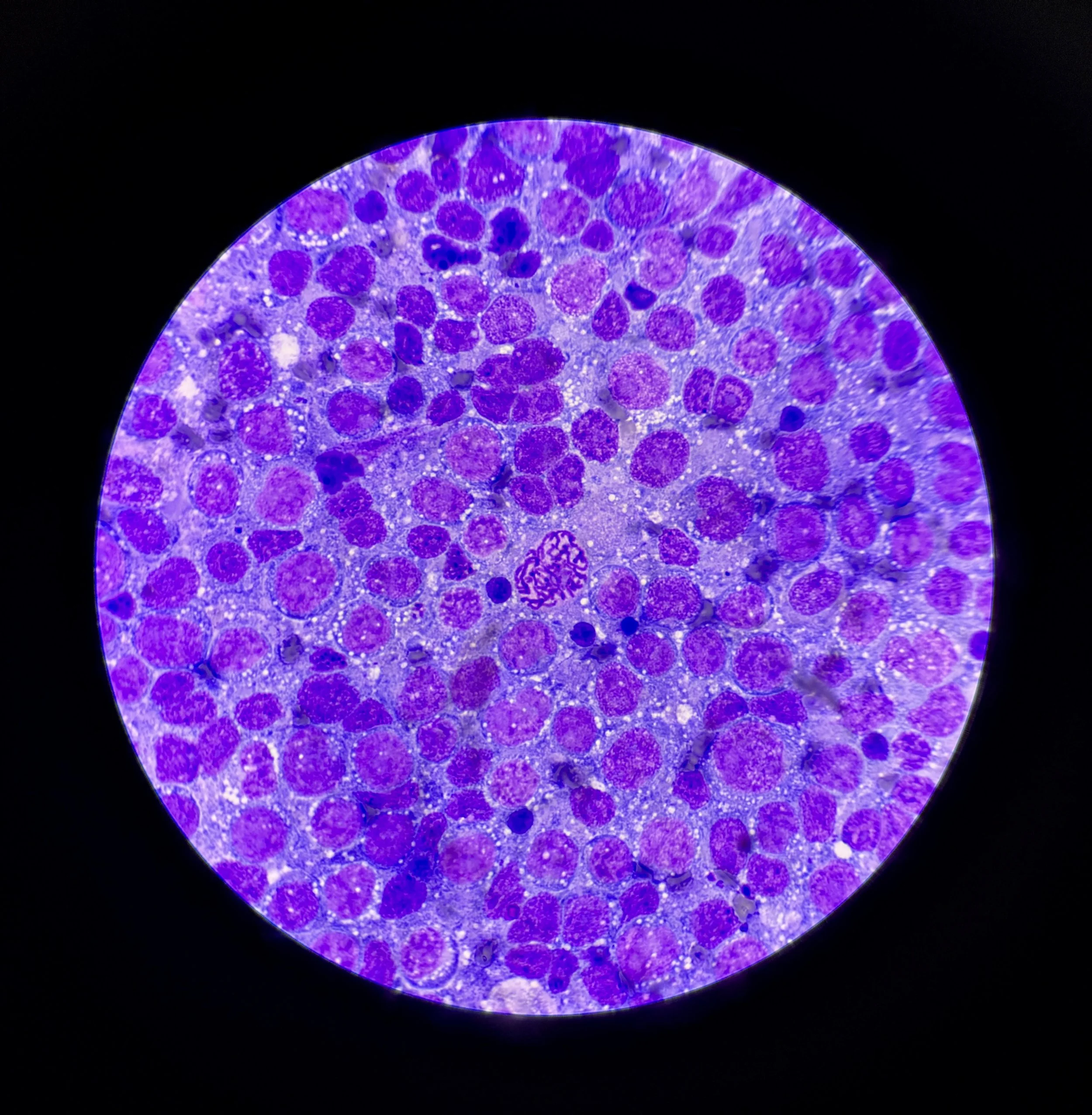
Lymphoma cells viewed down the microscope.
Once lymphoma has been diagnosed we are extremely experienced in providing chemotherapy for lymphoma in dogs and cats.
Contrary to common belief, chemotherapy is normally extremely well-tolerated by dogs and cats (much more so than in humans). It is not uncommon for our lymphoma patients to experience one to two years of excellent quality life while receiving chemotherapy, and some patients can actually be cured!
As well as “traditional” lymphoma drugs, we also use newer lymphoma drugs such as Rabacfosadine (Tanovea®) and verdinexor (LAVERDIA™-CA1).
It’s very important to understand that every patient and every cancer is different, so we always spend a long time counselling pet parents about all their options before starting any treatment. We may recommend referral to a cancer specialist, we may treat the cancer ourselves, or in some cases we will manage the case in conjunction with specialists via telemedicine.
Mast cell tumours:
Mast cell tumour (MCT) is the most common skin tumour in dogs, although it can spread internally in some cases.
MCT’s pose a significant challenge because the exhibit an extremely wide range of behaviours, from benign all the way through to extremely malignant.
Accurate diagnosis, grading, and staging of MCT is critical.
We manage MCT very commonly, and can manage most types of MCT with surgery, chemotherapy, or a combination of these.
We also use Stelfonta®, a new form of anticancer drug injected directly into the tumour, in patients with MCT in places very difficult to perform surgery.
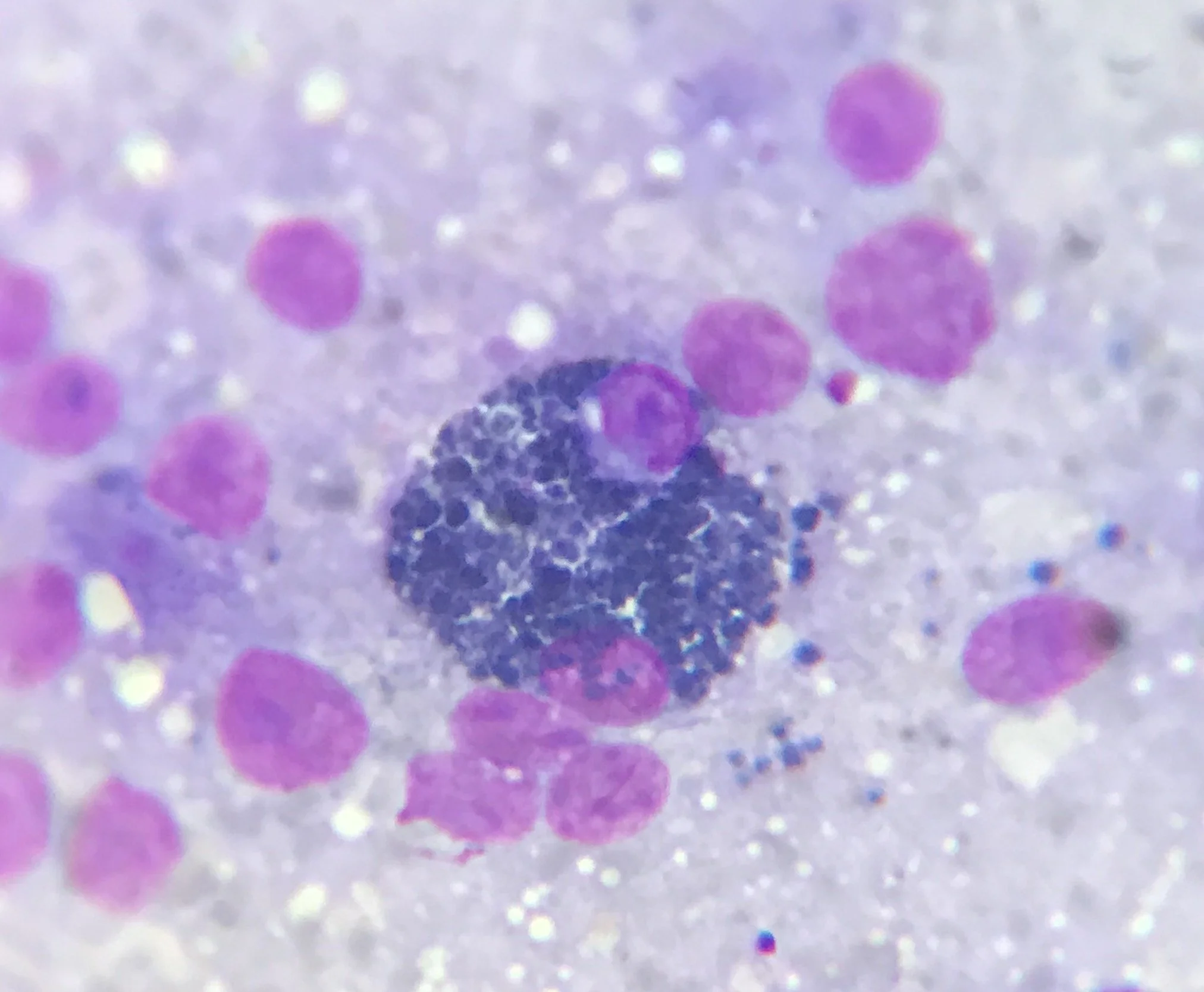
A melanoma cell, showing characteristic black granules, under the microscope
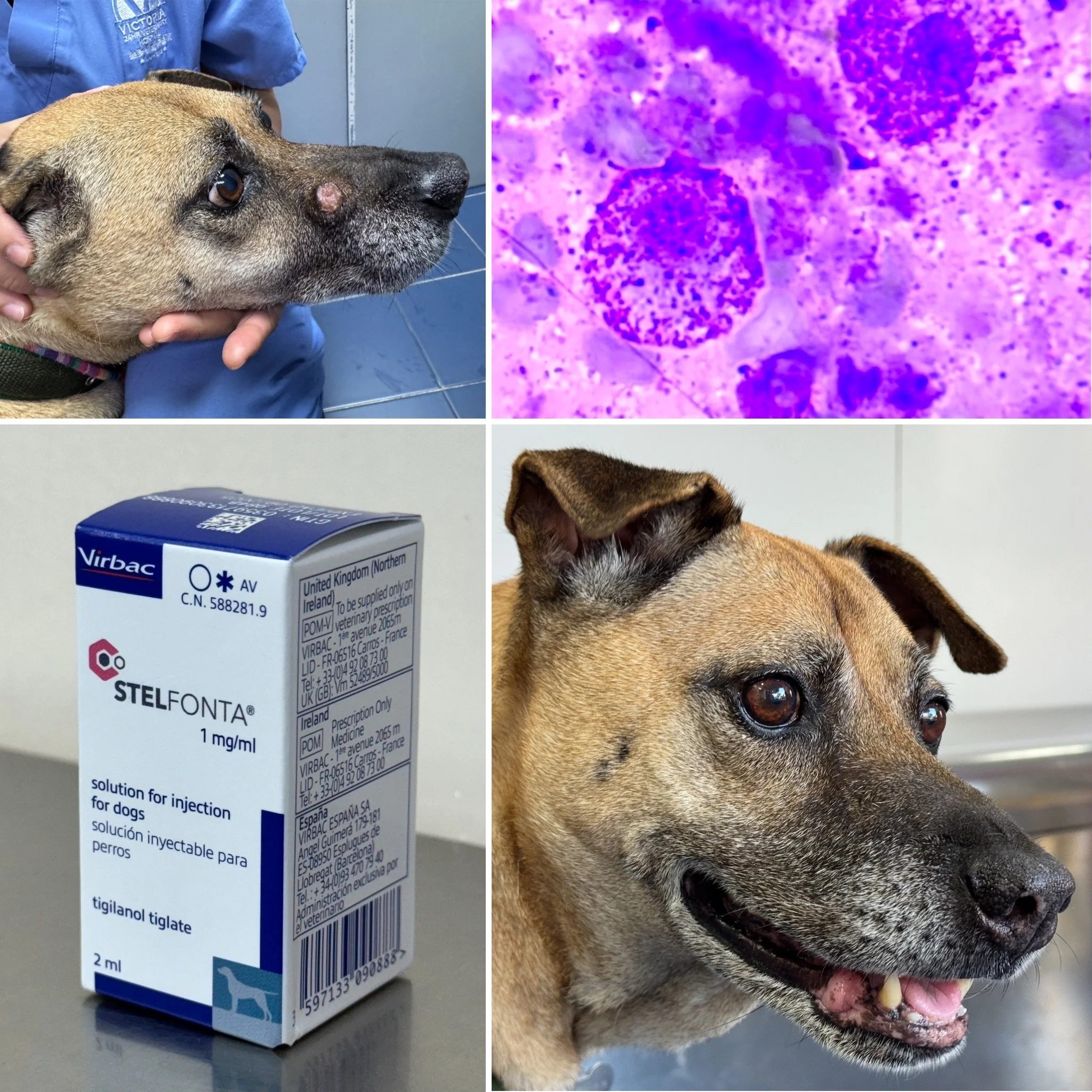
Tabasco, successfully treated with Stelfonta® for a MCT on the face, a very difficult site for surgery.
Melanoma:
Previously one of the most feared cancers of humans and dogs, immunotherapy is now available for melanoma, in the form of the Oncept® melanoma vaccine.
Management of melanoma is usually multimodal, involving careful staging, often followed by surgery and then Oncept®.
Bladder cancer:
Bladder cancers, also called transitional cell carcinoma, or TCC for short, are common in dogs.
These tumours frequently respond very well to chemotherapy. With the right drugs, the chemotherapy can be concentrated in the urine, hitting the cancer very hard, with minimal effects on the rest of the body…
We have had patients survive for multiple years after diagnosis with regular chemotherapy.
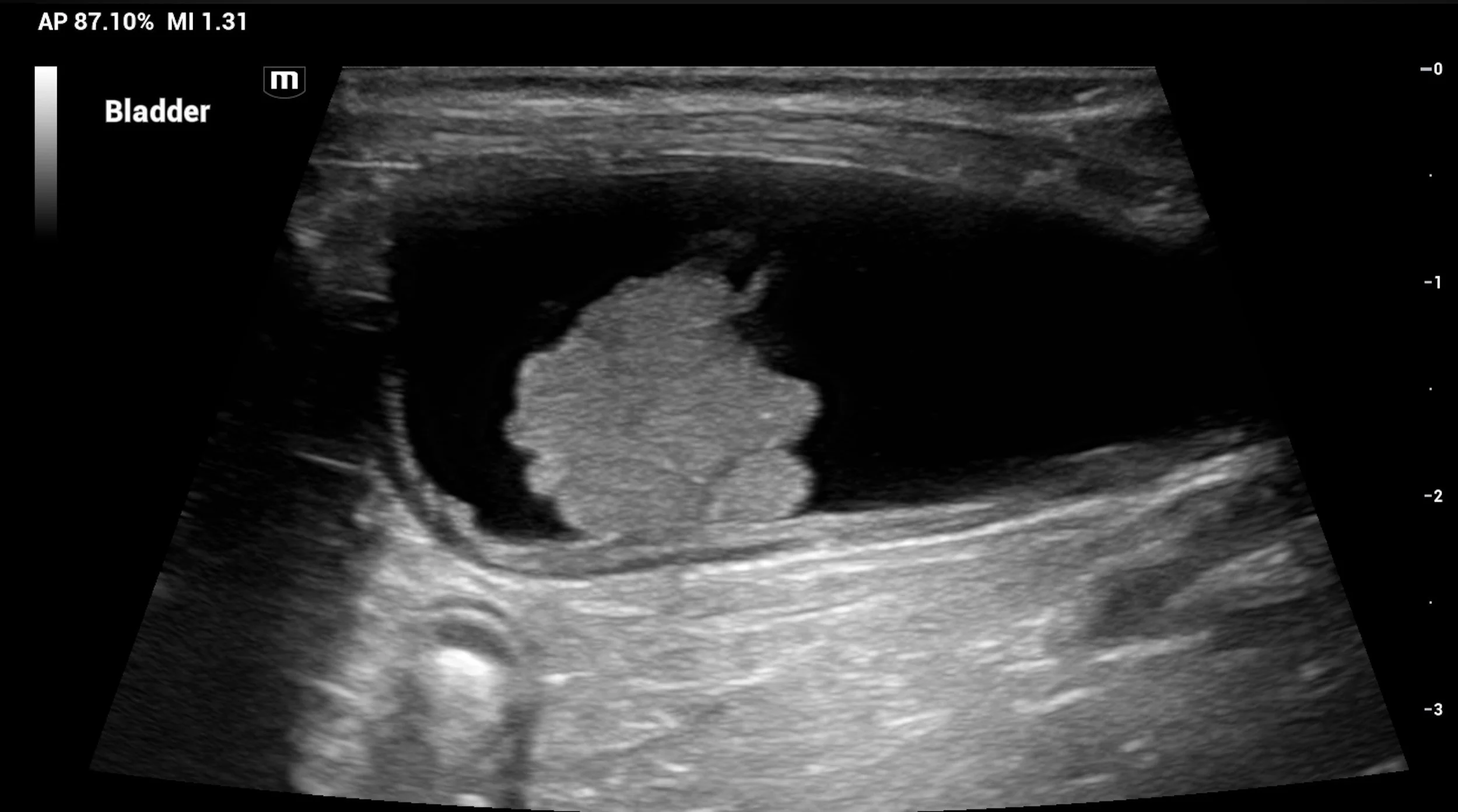
Ultrasound image of a bladder tumour (TCC) in a dog.
Other cancers:
Although there are too many different kinds of cancer to mention, some that we commonly see and treat include a wide variety of skin cancers, usually treated by surgery, splenic cancers, treated by spleen removal surgery, leukaemia, multiple myeloma, and many more…
Since every case is different, we recommend an initial consultation with one of our vets to decide whether surgery, chemotherapy, a combination, or referral to a cancer specialist is the right answer for your pet.